
Google now charges for some missed LSA calls: what changed on 1 October 2026
Since 1 October 2026, a Local Services Ads call you miss during business hours can be charged as a lead if the caller stays on the line for more than 20 seconds. Here is the rule, what it costs you, and the smallest fixes.
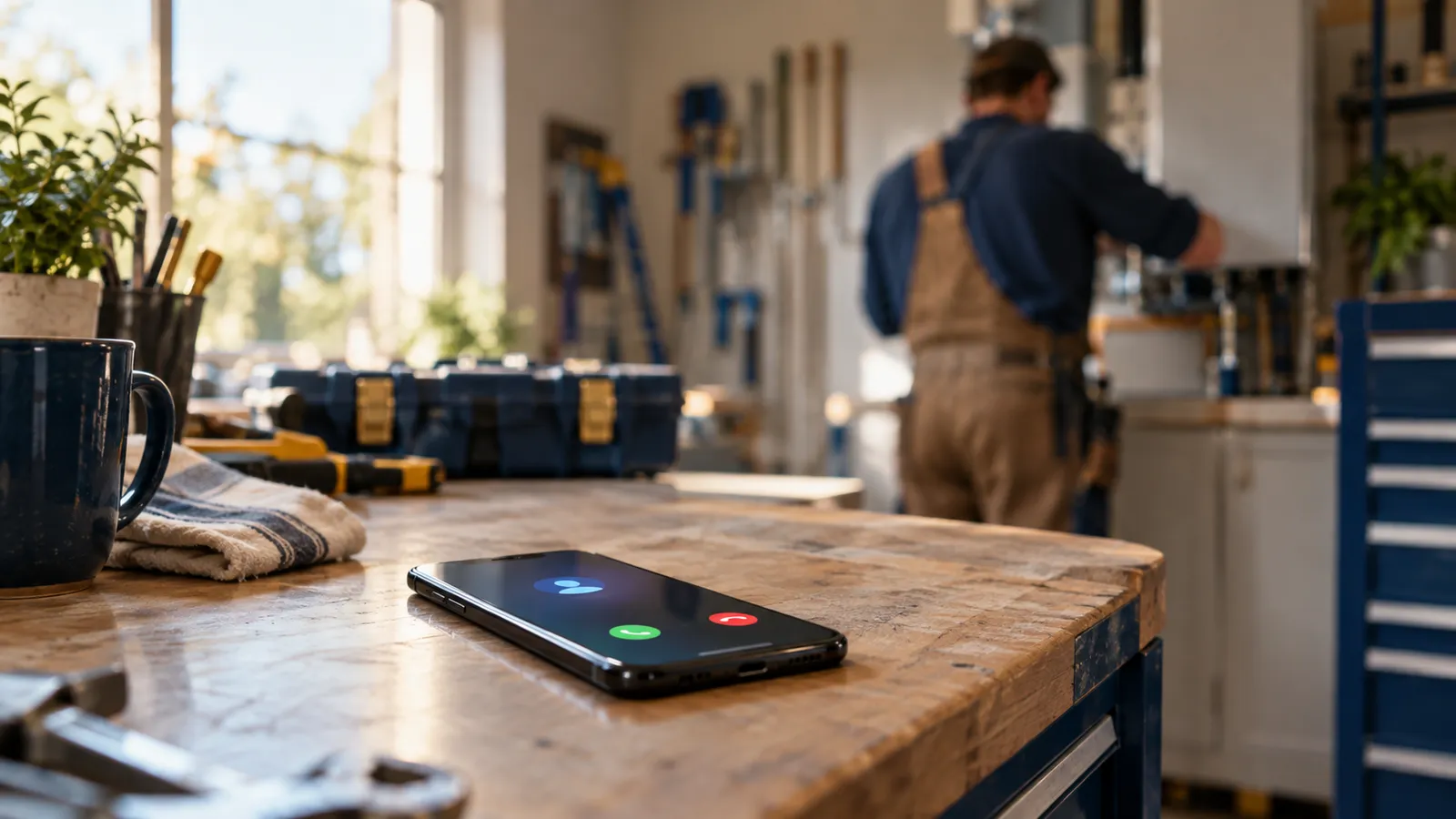
The short answer. Since 1 October 2026, Google can charge you for a Local Services Ads call you never answered. If the call comes in during your business hours and the caller stays on the line for more than 20 seconds, it counts as a valid lead. That includes calls that go to voicemail, whether or not the caller leaves a message. Missed calls are common: in Invoca’s 2026 home-services call data, 27% of calls lasting over 30 seconds weren’t answered by a person.
Who this is for. You run Local Services Ads, and your sale starts with a phone call: someone needs a job done, calls the number on your ad, and books a visit or an estimate. You or your team can’t always get to the phone, because you’re on a job, with a customer, or on another call.
What exactly changed on 1 October 2026?
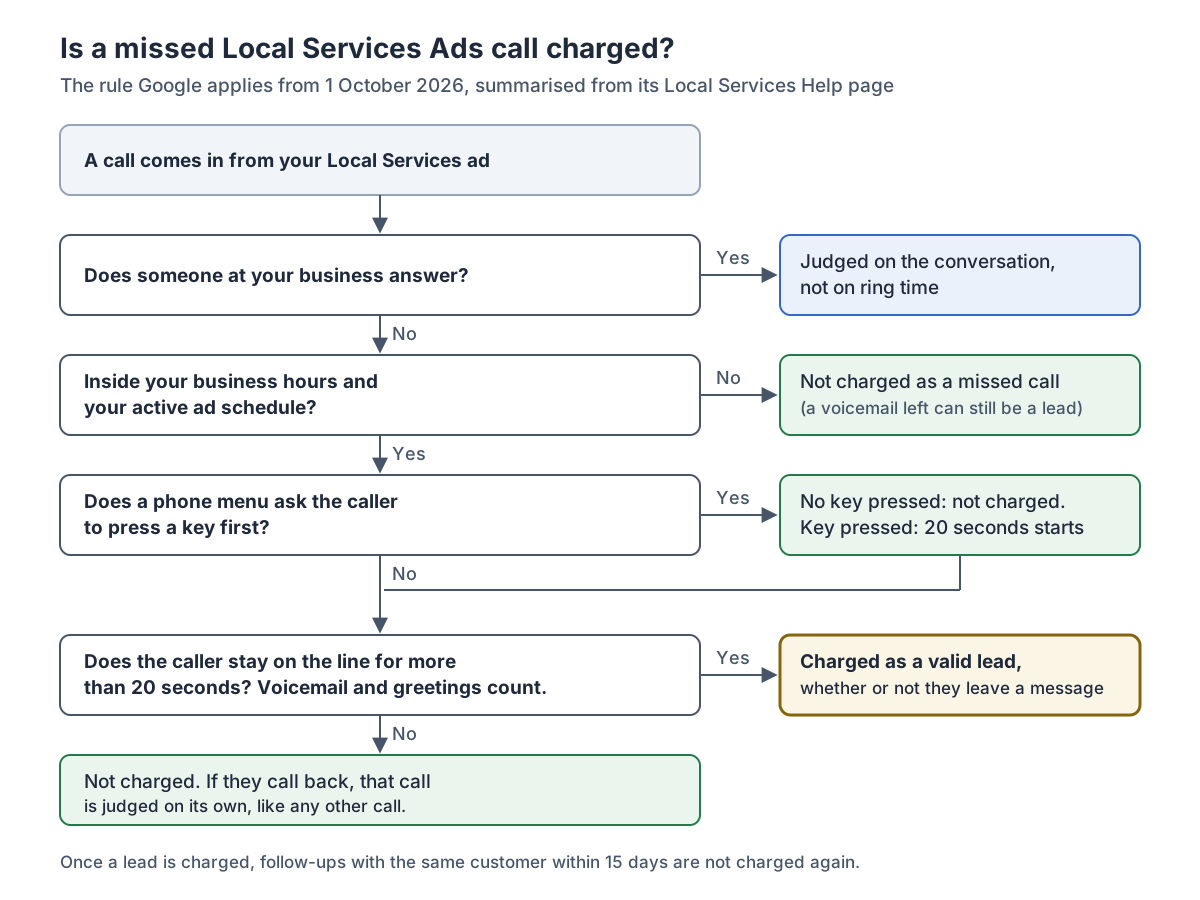
A missed call is now a chargeable lead. Google’s Local Services Help page on how leads work lists, among valid leads: “You missed a phone call during your business hours and the customer stays on the line for more than 20 seconds.”
The date comes from Google’s notice to advertisers. Search Engine Roundtable quoted the email on 25 August 2026: “On October 01, 2026, we are updating how and when you are charged for call leads originating from Local Services Ads.” The help page itself shows no effective date, so we are relying on that notice for the date and on Google’s page for the rule.
The rest of the rule, from the same Google page:
- Voicemail counts. “If a call goes to voicemail or an automated greeting during your business hours, it’s treated as a connected call and is charged if the caller stays on the line for more than 20 seconds, whether or not they leave a message.”
- Phone menus pause the clock. If your system asks callers to press a key, the 20 seconds start at the first key press. A caller who hangs up without pressing a key isn’t charged.
- Answered calls are judged on the conversation, not on ring time. If you pick up after 25 seconds of ringing, you aren’t charged for the ringing.
- Business hours are your Google Business Profile hours. If your ad schedule is different, unanswered calls are only charged when they happen inside both.
- One charge per customer for 15 days. Once a lead is charged, follow-up calls or messages with that customer aren’t charged again, as long as there is interaction within 15 days and the contact comes from the same number or email.
Is Google just charging me for junk calls now?
Some of the frustration is fair, and part of it is now out of your hands. One poster on r/LocalServicesAds, who runs the ads for a client, put it plainly: “Google claims that you are only charged for leads and then basically says everything is a lead.” A commenter replied: “We hardly see refunds nowadays with the automation.”
Here is what Google’s own pages say about getting money back. Crediting is mostly automatic: Google’s models reassess charged leads and may credit the ones they judge low quality, in most cases within 30 days. Google also says it “no longer supports credits for ‘job type not serviced’ and ‘geo not serviced’ leads.” So a caller who wants a job you don’t do, or lives outside your area, is your settings problem, not a refund. Tighten your service areas and job types instead. You can still rate any lead through the survey on the Leads page; Google lists “a bonus credit for leaving feedback” as one way a charged lead can end up credited.
The missed-call rule is different, though. A caller who waits on the line for 20 seconds has at least tried to reach you, and you can only find out whether they were a real job by talking to them. The part you control is what happens in those 20 seconds.
Try it. If you’re wondering what answering every call would sound like, talk to our voice demonstration for two minutes. The business and calendar in the demo are simulated; the conversation is live.
How many of my calls is this likely to affect?
Your own Leads page is the only real answer, but the published numbers suggest it isn’t a rounding error. In Invoca’s 2026 benchmark, which averages calls tracked across its home-services customers, 52% of all calls were answered by a person. Filter out misdials and quick hang-ups and the rate rises: 65% for calls over 15 seconds, 73% for calls over 30 seconds. So in that data, 27% of calls that lasted more than 30 seconds didn’t reach a person.
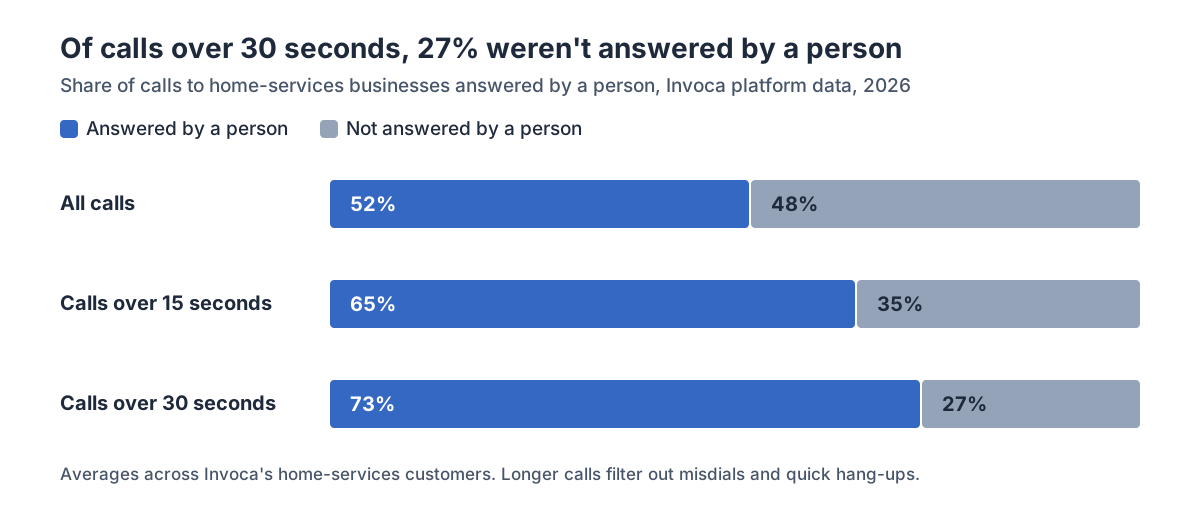
Invoca’s figures cover calls from several marketing channels, not just Local Services Ads, and only businesses that use its call tracking. Treat them as a sense of scale, then count your own.
What should I do about it?
Start with the cheapest change, measure for two weeks, and go further only if the missed calls are still there.
- Count first. Pull your Leads page for the last two to four weeks. How many calls were missed, at what times, and how many were charged? Most of the fix depends on whether misses cluster (Monday mornings, lunch, end of day) or are spread out.
- Make your hours honest. If nobody can answer before 8am or after 5pm, don’t list those hours, or don’t run ads in them. Invoca’s report makes a similar point: “If you can’t dispatch or book callers during off-hours, consider pausing the paid campaigns driving high call volume into those windows — unless an AI agent is handling them.” Trimming your hours costs nothing and stops paying for calls nobody can take.
- Set a callback rule. Every missed LSA call gets a call back within minutes, and someone owns it. If the missed call was already charged, a callback within 15 days isn’t charged again. If it wasn’t, Google judges the callback like an answered call.
- Cover the busy hours only. If misses cluster, forward overflow to a second phone, a colleague, or an answering service for just those hours.
- Cover every hour you advertise. If missed calls are spread across the day, or you want ads running evenings and weekends, put an answering service or AI receptionist on the line that can book the job, not just take a message.
A note on phone menus. Google’s rule means a “press 1” menu stops the clock for callers who hang up without pressing a key. Adding one only to avoid charges also adds a step for every real caller. If you use a menu, keep it for routing that helps the caller.
Which setup fits?
Compare options by whether a missed call still gets charged, whether the caller can book, and who does the work.
| Setup | Missed calls charged? | Caller can book on the call? | Who does the work |
|---|---|---|---|
| Voicemail only | Yes, after 20 seconds | No | You call back |
| Honest hours and schedule | Fewer, outside staffed hours | Only when you answer | You, during your hours |
| Overflow forwarding | Fewer at busy times | If the person can book | Whoever takes overflow |
| Message-taking service | No, the call is answered | No | You call back |
| AI receptionist that books | Not stated by Google | Yes, if your calendar is connected | The AI; you take handoffs |
An answered call is judged on the conversation, so it can still be charged if it’s a valid lead. That’s fine: it’s the lead you were paying for. Google’s page doesn’t say how it classes a call answered by an AI; either way, a valid lead is charged once.
What does this cost a business like mine?
Worked example (example, not a statistic). Every input is an assumption. Swap in your own numbers from your Leads page.
- 40 calls a month come from your Local Services ad during business hours.
- You miss 1 in 4 of them: 10 calls.
- 8 of those 10 callers stay on the line past 20 seconds, including the ones who reach voicemail.
- Your average lead price is $60.
| Item | Example figure |
|---|---|
| Missed calls charged | 8 |
| Paid for calls nobody answered | $480 a month |
| Callbacks you reach (say half) | 4 |
| Callers you paid for but never spoke to | 4 ($240) |
Under the new rule, all 8 are charged whether or not the caller left a message. The bigger cost can be the jobs, if those callers book someone else. If 1 in 3 of the 4 people you never reach would have booked, that’s roughly one job a month, every month.
Numbers we left out
- “85% of callers who don’t get an answer won’t call back.” We found no study behind it; the trace is in AI receptionist vs answering service.
- “62% of calls to small businesses go unanswered.” It comes from a 2016 study of 85 businesses, and it includes calls that went to voicemail. We cover it properly in The Empty Desks in Most Service Businesses.
- “Every missed call costs $1,200.” It isn’t in the Invoca post it is credited to; traced in How much does an AI receptionist or answering service cost?
Where this breaks down
- The date rests on Google’s email. Google’s help page states the rule but not the 1 October start date, which comes from the advertiser notice as quoted by Search Engine Roundtable. Check your own account notices.
- Google can change it. Local Services Ads are also moving into Google Ads. Re-check the help page before you change your setup.
- Exceptions apply. Google says lead credits aren’t available for health care, tax specialists or advertisers in EMEA, and booking leads are US and Canada only.
- Crediting is Google’s call. You can rate a lead, but you can’t see how Google’s models judge it.
- The answer-rate data is one vendor’s. Invoca’s figures cover its own customers and several channels. Your miss rate may be better or worse.
How Leadio does it
Leadio’s Paid Advertising Management runs Local Services Ads as part of one path from ad to booked appointment: setup and verification, service areas, lead review, and tracking from each enquiry to a booked next step. We test the handoff before budget runs.
When nobody on your team can pick up, our 24/7 Answering Service, an AI receptionist run for you, answers the calls your campaigns create around the clock, asks your qualifying questions, and books callers who are ready where your calendar is connected. Try it at the voice demonstration, then see what it would look like for your business.
FAQ
Does Google charge for missed calls on Local Services Ads? Yes, since 1 October 2026, if the call is during your business hours and ad schedule and the caller stays on the line for more than 20 seconds. Calls that reach voicemail count too.
Am I charged if the caller leaves a voicemail after hours? An unanswered call outside your hours or ad schedule isn’t charged as a missed call, but Google lists a voicemail from the customer as a valid lead in its own right.
Will I be charged twice if the same customer calls again? Not within 15 days, if there’s interaction in that time and they use the same number or email. After 15 days with no activity, a new call is a new lead.
Can I dispute a charged missed call? Google may credit low-quality leads automatically, in most cases within 30 days, and you can rate any lead through the survey on the Leads page. Google no longer credits leads for jobs or areas you don’t serve.
Does a phone menu stop the charge? It stops the clock until the caller presses a key. A caller who hangs up without pressing one isn’t charged. Once they press a key, the 20 seconds start.
Paid Advertising Management
Google Search, Local Services Ads and Meta campaigns, built as one path from ad to booked appointment.
More from get found.
Are your Facebook leads junk, or just slow to reach?
Before you blame Meta for bots, check how fast your team called. Facebook lead forms are built for volume by default, and a lead reached the next day is a different lead. A three-question check, the form settings to change, and when to go further.
Can an AI clone of you post for your business, and should it?
An AI clone built from your voice and likeness can deliver videos you never filmed. Whether it helps or costs you trust comes down to consent, disclosure and what you use it for. What the research says, how the capture session works, and when not to use one.
LSAs are moving into Google Ads: what to do before your account migrates
Google is moving Local Services Ads into Google Ads as Performance Max campaigns with pay-per-lead goals. Your past reports will not come with you. Here is what changes, what stays, and a checklist for the 14 days before your date.
See where your leads are leaking.
Find out which stages are leaking, who we'd staff to plug them, and which Growth Team follows.